2026-10-21
Nonhyeon Station Dermatology: How to Choose Between Juvelook and Juvelook Volume
Compare Juvelook and Juvelook Volume at Dojagi Clinic: how PDLA stimulates your own collagen, which type suits your concerns, when results appear, and what to know before treatment.

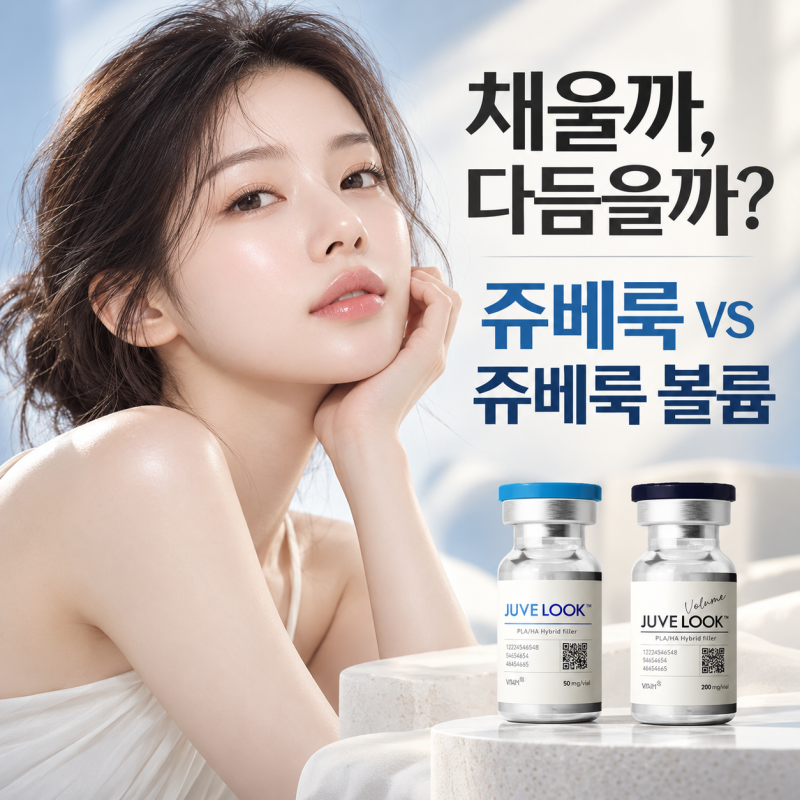
Have you noticed more days lately when your makeup doesn't go on as smoothly as before and your cheeks look a little empty? When fine lines around your eyes start showing up one by one, it's only natural to worry even more.
You may want to fill things in, but methods that add volume all at once, like fillers, can feel a bit daunting. It's completely understandable to worry that the results might look too obvious or make your expression look unnatural.
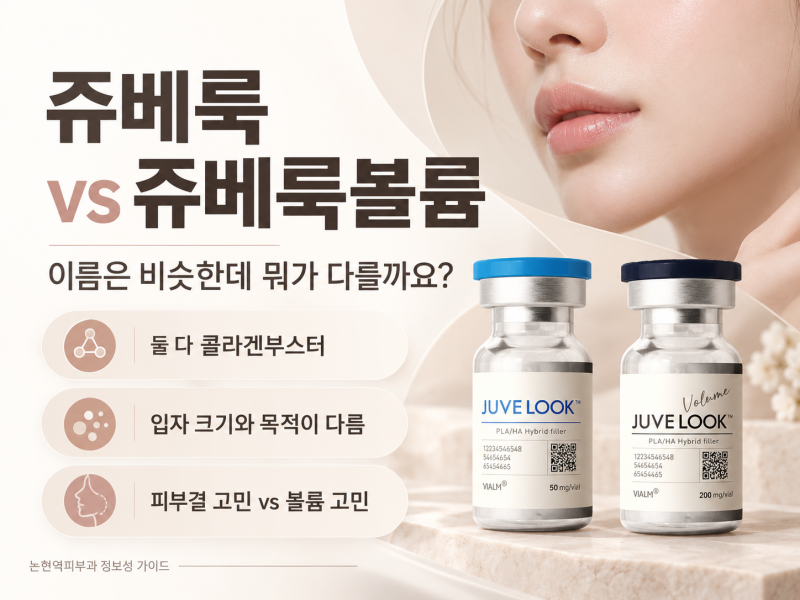
At Dojagi Clinic, a dermatology clinic near Nonhyeon Station, we often hear from patients with these concerns who ask about Juvelook and Juvelook Volume together. Since the names sound so similar and are easy to mix up, today we'll put the two treatments side by side and compare them one by one. We'll also cover which type suits whom and what to keep in mind after treatment, all in one place.
Is there a way to build up gradually instead of using fillers?
Yes, there is. It's called the collagen booster method.
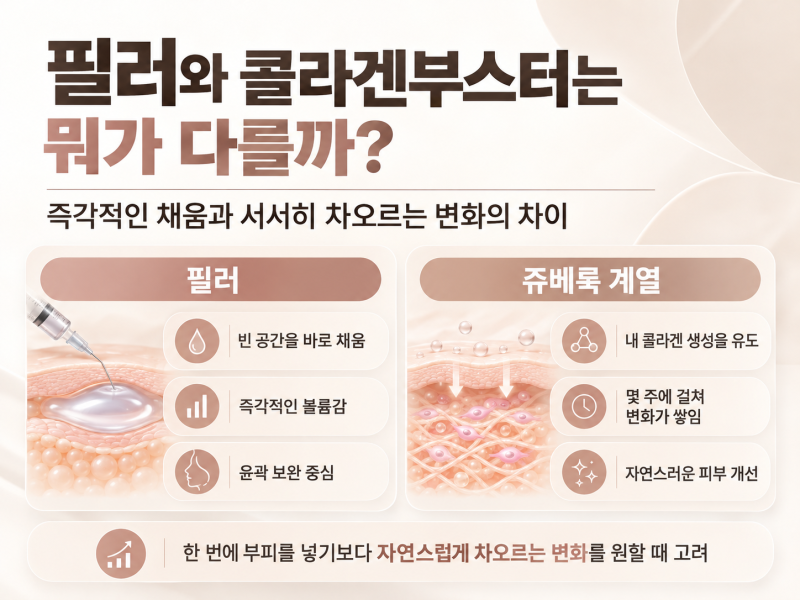
Both treatments use PDLA (poly-D,L-lactic acid, a biocompatible ingredient that breaks down slowly in the body) as their main ingredient. When it's injected into the dermis (the firm layer beneath the skin where collagen resides), the skin perceives it as a stimulus and begins producing its own collagen.
If fillers fill empty spaces right away, this approach helps your own skin fill them in over time. So rather than dramatic changes right after treatment, results tend to build up subtly over several weeks. That's why it's especially popular among people who want a natural change that doesn't look obvious.
The ingredient gradually breaks down in the body over time, and your own collagen fills the space it leaves behind, so the results tend to look more natural.
The names are similar, so what's the difference?
The biggest difference lies in particle size and purpose. The standard type has smaller particles, so it spreads evenly across the skin and focuses on fine-tuning elasticity. That's why it's often used like a skin booster to improve the overall condition of the skin.
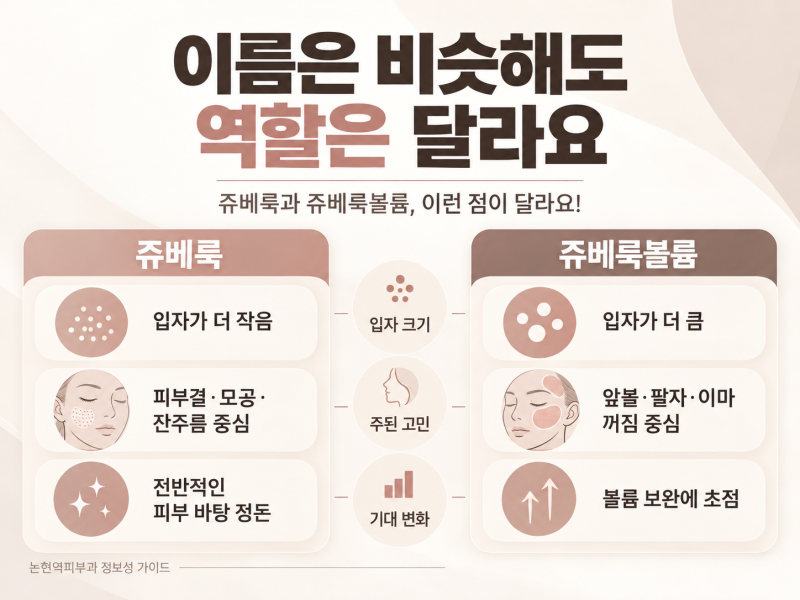
The Volume type uses the same ingredient but with slightly larger particles. As the name suggests, it's designed to add volume to sunken areas. To put it simply, the standard type is like evenly packing down the entire floor, while the Volume type is more like concentrating on filling in a hollow. They come from the same family but play different roles, so the right choice depends on your concerns.
That's why during consultations, we ask what bothers you most about your face right now before discussing the names. Whether your main concern is skin texture or hollowness makes a big difference in where we start.
Which one is better suited to my concerns?
If you're bothered by rough skin texture, enlarged pores, acne scars, or indented marks, the standard type tends to be a good fit. It can also be a good choice if your main concerns are overall fine lines and loss of elasticity.
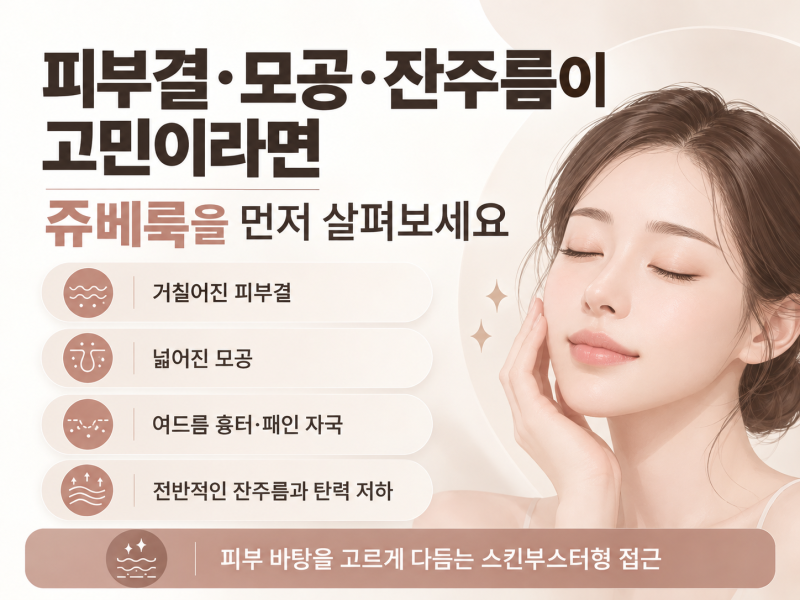
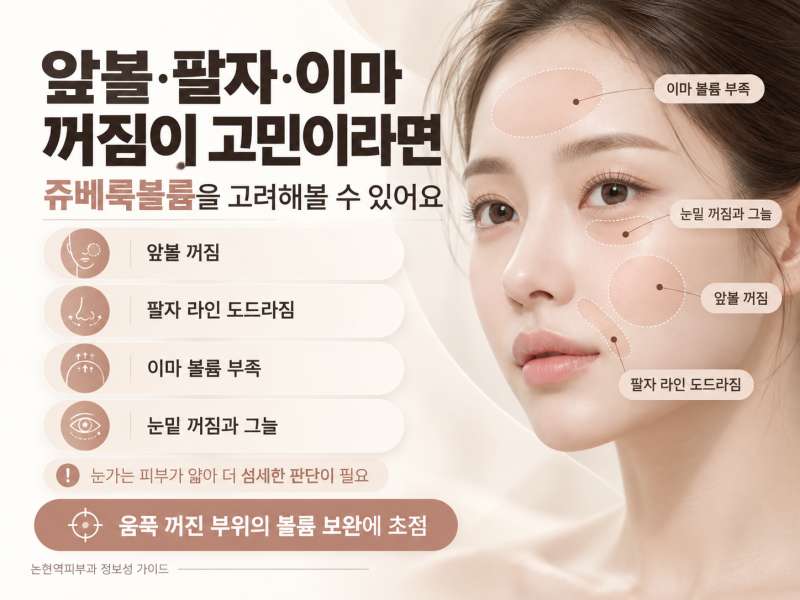
On the other hand, if the front of your cheeks has flattened, your nasolabial folds look deep, or your forehead appears flat and sunken, we usually look at the Volume type first. It's also sometimes considered for under-eye hollows that cast shadows and make you look tired. However, the skin around the eyes is thin and sensitive, so it requires more careful assessment.
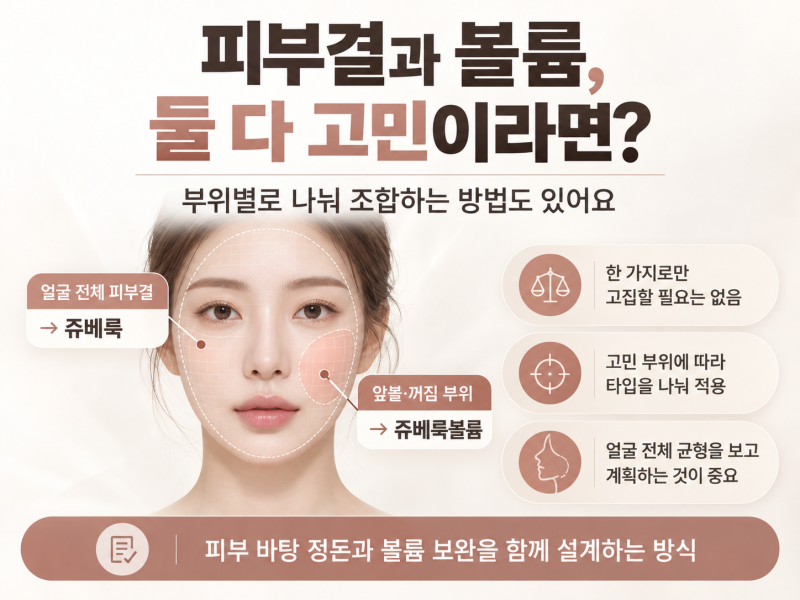
If your skin has started to sag and you've also lost volume, many people feel that the volume type gives more noticeable results than the standard type. If you have both concerns, you can also combine the two by area, so there's no need to stick to just one. For example, you could use the standard type to refine the texture across the whole face and the Volume type only on hollowed areas like the front of the cheeks.
When do the results appear, and how long do they last?
New collagen takes time to form, so many people start to notice small changes after a few weeks. Even if there doesn't seem to be much change in the first few weeks, your skin is steadily regenerating beneath the surface, so there's no need to rush.
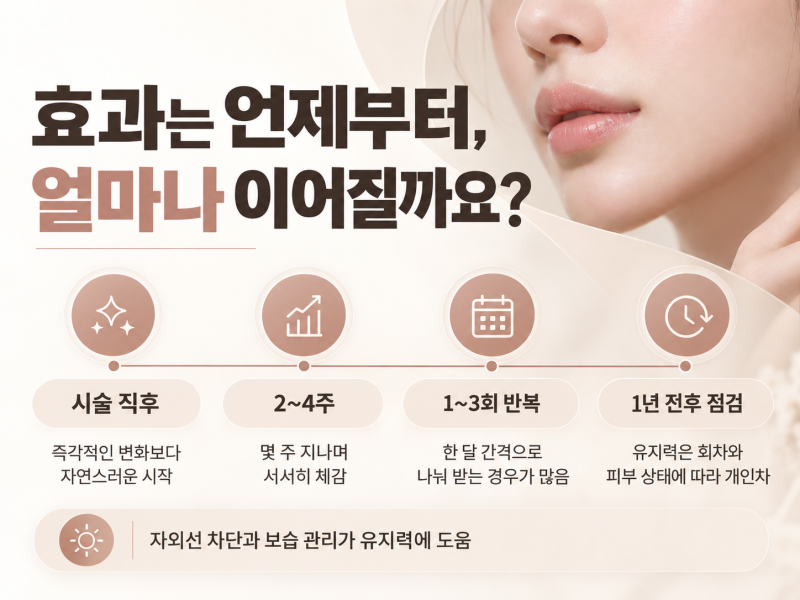
That's why we often recommend spacing out sessions about a month apart rather than trying to finish everything at once. The more sessions you complete, the clearer the changes become, and they tend to last longer.
Juvelook's duration varies depending on the number of sessions and your skin condition, but many people say results last more than a year when treatments are spread out sufficiently. The Volume type also tends to last longer after 2 to 3 sessions than after just one.
Since aging is an ongoing process, if you want to maintain your results, it's a good idea to check in roughly once a year. Consistent sun protection and moisturizing can also help protect newly formed collagen. Your daily habits can have a surprisingly big impact on how long your results last.
What should I know before getting treatment?
The most important thing to watch for is nodules (small bumps felt under the skin). They can form when the ingredient clumps in one area or too much is used, so it's crucial to carefully control the injection depth and amount.

Other possible side effects of Juvelook include swelling, bruising, and redness at the treatment site, which usually subside within a few days.
For a few days after treatment, please take a break from activities that raise your body temperature, such as saunas or intense workouts. It's also best to avoid rubbing or pressing the treated area firmly by hand for the time being.
If you have skin inflammation or have recently undergone another procedure, please let us know during your consultation so we can plan more safely.
Ultimately, even with the same ingredient, where on your face it's used and what concern it addresses determines the outcome. If you want to get the most out of Juvelook, the first step is to carefully check your skin thickness and the degree of hollowing. Even in the same area, skin thickness and fat content vary from person to person, so the amount and depth injected must also differ.
At Dojagi Clinic, we examine the balance of your entire face before discussing which type would suit you best. If there are areas that concern you, feel free to point them out during your consultation.
This post is a medical advertisement written by the clinic for the purpose of providing medical information. It complies with Article 56, Paragraph 1 of the Medical Advertising Act. Since results may vary depending on individual constitution and health status, please make treatment decisions after thorough consultation with your medical team.
Frequently Asked Questions
What's the difference between Juvelook and Juvelook Volume?
The two treatments use the same PDLA ingredient, but differ in particle size and purpose. The standard type has smaller particles and focuses on refining skin texture and elasticity, while the Volume type has slightly larger particles and focuses on filling sunken areas.
Which concerns is Juvelook best suited for?
The standard Juvelook type tends to be a good fit if you're bothered by rough skin texture, enlarged pores, acne scars, or indented marks. It can also be a good choice for overall fine lines and loss of elasticity.
When is Juvelook Volume worth considering?
If the front of your cheeks has flattened, your nasolabial folds look deep, or your forehead appears flat and sunken, the Volume type is usually considered first. It is sometimes considered for under-eye hollows that cast shadows and make you look tired. The skin around the eyes is thin and sensitive, so it requires more careful assessment.
When do Juvelook results appear?
Most people start to notice gradual changes after a few weeks. Even if there's little visible change in the first few weeks, collagen regeneration continues beneath the skin. We generally recommend receiving several sessions spaced about a month apart.
How long do Juvelook results last?
It varies depending on the number of sessions and skin condition, but many people say results last over a year when treatments are completed in sufficient sessions. The Volume type also tends to last longer after 2 to 3 sessions than after one. Since aging continues, we recommend checking in about once a year to maintain results.
What are the side effects of Juvelook?
The most important side effect to watch for is nodules, which are small bumps felt under the skin. They can occur when the ingredient clumps in one area or too much is used, so careful control of injection depth and volume is important. Other side effects include swelling, bruising, and redness, which usually subside within a few days.